
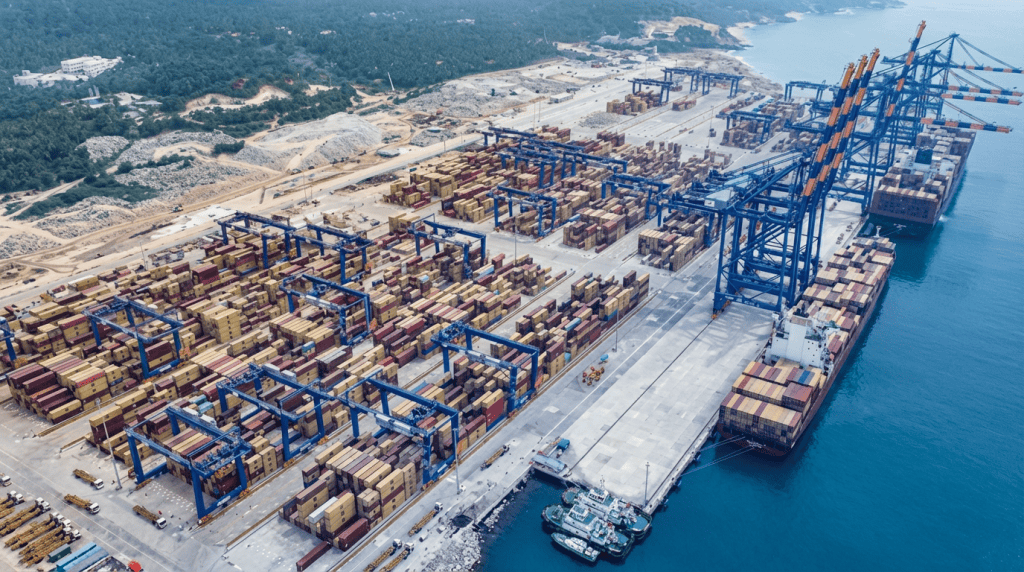
MSC has removed India’s Vizhinjam port from its Middle East–Indian Subcontinent–Africa service (IAS), ending the carrier’s rotation at the country’s newest transshipment hub. Vizhinjam began commercial operations in July 2024 with ambitions to handle 1 million TEU annually in its initial phase, expanding to 6.2 million TEU in future developments (Container News). The withdrawal represents a setback for India’s push to reduce reliance on foreign transshipment hubs, where approximately 75% of cargo is currently handled at ports such as Colombo, Singapore, and Port Klang.
Located just 10 nautical miles from major shipping lanes, Vizhinjam can accommodate ultra-large container vessels of up to 20,000–25,000 TEU (Maritime Executive). Despite these advantages, MSC’s removal suggests operational or commercial considerations—potentially including vessel scheduling, service reliability, or cost efficiency—outweigh the port’s geographic and infrastructure benefits. Adani Ports’ competitive pricing strategy, offering significantly lower vessel-related charges than Colombo, appears not to have been sufficient to secure sustained carrier commitment at this stage.
However, single-carrier withdrawals from newly commissioned ports are not uncommon during the initial ramp-up phase. Industry observers note that early service rotations are often adjusted as carriers fine-tune network balance, transit times, and fleet deployment, particularly on long-haul services linking multiple regional markets. From this perspective, MSC’s decision may reflect service-specific scheduling and optimisation factors rather than a definitive assessment of Vizhinjam’s long-term commercial viability—especially given the port’s limited operational track record since mid-2024.
You need a free subscription to read the entire article.
Subscribe
Subscribe for FREE and gain access to all our content.
More than 5000+ articles.